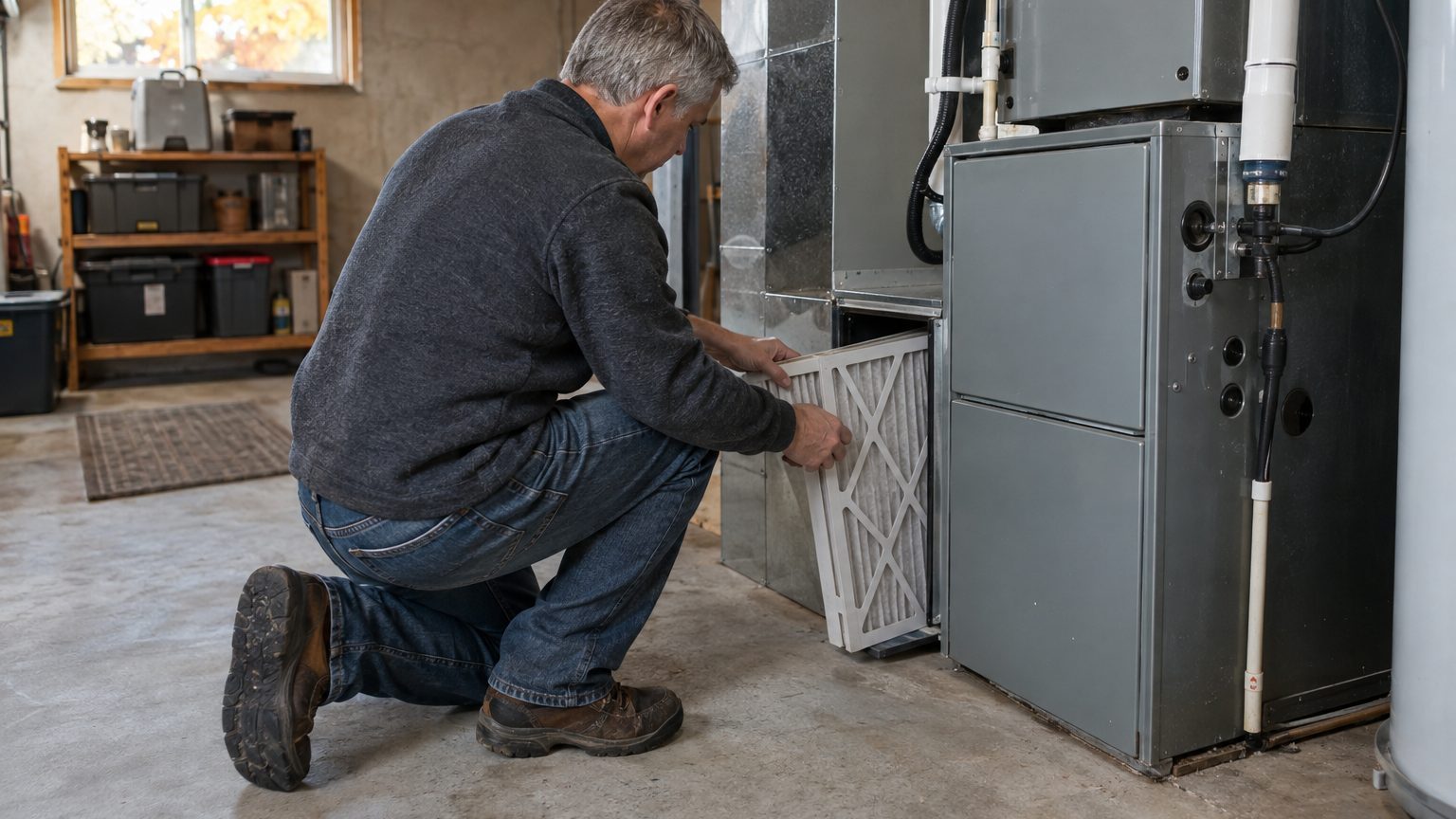
Most air filter manufacturers recommend replacing your furnace filter every 90 days, though the EPA advises checking it monthly, especially during winter, and changing it whenever it looks dirty. That’s a decent starting point. Treat it as a ceiling, not a target.
Where you land below that ceiling depends on what you bought.
- Flat fiberglass filters are rated MERV 1 to 4 and last about 30 days at most.
- Pleated filters typically last 60 to 90 days, while 4-inch filters can last 6 to 9 months.
- Homes with pets should change a 1-inch filter toward the 30-day end of the range.
Your filter type sets the baseline
Start with the material. Flat fiberglass panels are the thin, blue-green or white rectangles that cost a few dollars, and the EPA’s 2018 technical guide lists flat panel filters at MERV 1 to 4. They protect the furnace from lint and little else, and one contractor guide says fiberglass lasts 30 days at most, pleated 60 to 90 days. Foam and hoghair filters are the odd ones out: you clean them monthly and replace them yearly.
Thickness changes the math again. One-inch and 2-inch filters run 1 to 3 months, 4-inch models 6 to 9 months, and 5-inch models 9 to 12 months. Deeper pleats simply have more surface to fill before airflow suffers. The catch is the price tag, since thicker filters hold more debris and last longer, but they also tend to cost more.
Density adds a twist most people miss. A MERV rating runs from 1 to 16, and the tighter weave that catches finer particles also clogs faster. One home-improvement guide suggests that filters rated MERV 6 through 9 get changed every 90 days, while MERV 10 through 12 need changing every 60 days.
A better filter is not a lazier filter.
Pets, climate and crowded households shorten the clock
Dogs and cats are the usual culprits. Hair and dander load a filter quickly, so for a 1-inch filter in a home with pets, change it toward the 30-day end of the usual 30 to 90 day range. Even a 2-inch filter that normally lasts 90 to 120 days needs changing sooner with pets.
Geography matters as much as fur. In a mild region like the Southwest, the furnace may run only a handful of times each winter, so the 90-day rule can hold. Northern households whose furnaces barely rest for months may want a new filter every 30 to 60 days. Summer isn’t a free pass either, because the air conditioner pulls air through the same filter, and some guides recommend monthly changes during heavy cooling season. Headcount counts too. One filter manufacturer suggests changing filters 25% sooner for families of four or five, and 50% sooner for six or more.
Allergies and asthma tighten the schedule further. One HVAC contractor advises swapping the filter every 30 to 45 days for those households, ideally with a MERV 11 to 13 filter. Wildfire country is its own category. A thick MERV 13 media filter in a smoke-prone area may last around four months, according to one filter retailer, but only if you keep checking it.
Read the filter, not just the calendar
The cheapest test costs nothing. Pull the filter out and hold it up to a window or lamp. If it’s gray, covered in dust, or light doesn’t pass through, replace it. Visible hair or debris on the surface is the same verdict.
Budget filters deserve extra suspicion. One HVAC expert points out that many 1-inch filters sold at big-box stores are MERV 4 or 5 or lower, with little filtering surface, so they load up very quickly. The label may promise 90 days. In practice, he says, 90 days is probably far too long.
A clogged filter punishes the furnace in plain sight.
Dust and particles restrict airflow through the heating system, which forces the furnace to work harder, raises the heating bill and can eventually shorten the furnace’s life. One HVAC company claims the energy penalty can reach 15%, though that figure comes from an industry blog rather than a lab study. Other warning signs include weak airflow from vents, uneven temperatures between rooms, more dust on shelves, and whistling from the return duct. Any of them is reason to check the filter before calling a technician.
Habit beats memory, so build the habit around something you already do. Many manufacturers suggest replacing the filter at the start of each new season, and a monthly look on the first of the month fits easily alongside that. Write the install date on the cardboard frame with a marker. Keep one spare on a shelf near the furnace, because a filter you have to go buy is a filter that waits another two weeks.
One caution before you upgrade. Pet-focused guides recommend a MERV 13 filter for allergies or asthma only if your system can handle the airflow. Some older furnaces struggle with dense media, so check the owner’s manual for the maximum rating before you buy. A system starved for air can cost you more than the dust ever did.
Sources : filterbuy.com | filterking.com